A blog focused on nature, science, environmental topics, and happenings at the Pocono Environmental Education Center (PEEC).
To Hibernate, Perchance to Dream
- Details
- Written by PEEC - Janine
- Category: PEEC Blog
A Naif in the Forest by Darrell Berger
Wing Tips to Hiking Boots: Musings of a New, Full-Time Poconos Resident
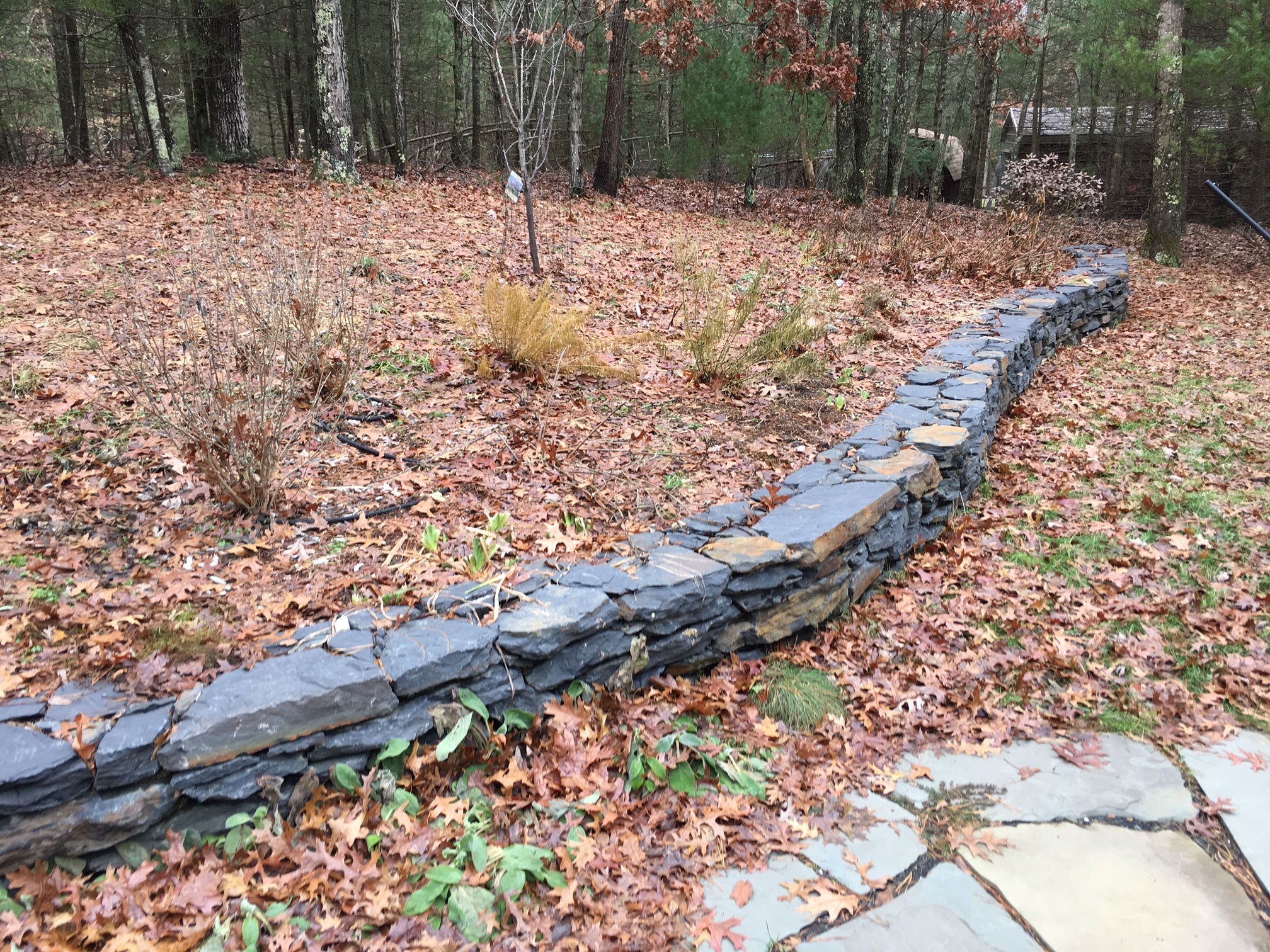
This photograph is our short fieldstone wall, which I call the “Mouse Hotel.” Most of the year I see many mice in and out of the little crevices. Squirrels and chipmunks hide their lunches; toads stay cool there. It drives Violet the Corgi crazy. Now it is as quiet as a hunter’s cabin off-season.
Almost everybody but the mice are hibernating. Mice are looking for a warm place for winter, perhaps in your foundation, near your chimney or, best of all, your cupboard! A great number of beasties hibernate, including black bears. Maybe. Depending on your definition.
Bears alter their metabolism considerably and can sleep for as long as seven months. However, some experts do not consider this true hibernation. A bear’s temperature does not lower nearly as much as the true hibernators. More importantly for naifs in the forest, they can be fully awake almost instantaneously. True hibernators require a long time to awaken.
The quietude bears attain in the winter is sometimes called “torpor.” I get that. Torpor is what overcomes me in the seventh inning, the third quarter and the next to last act of any Shakespearean play. I can’t say I arise from it almost instantaneously.
I recently asked a Pike County Facebook group when it was safe to put out bird feeders. That is, when would bears likely be in their long, deep sleep? The answers were most various: “I never take my feeders in.” “I never put out feeders.” “After the first hard freeze.” “After the first big snow.” “I put feeders too high for bears to get.” “Bears always get to my feeder no matter what I do.”
The ability of bears to awaken suddenly, and not truly hibernate at all, might be why I received such a broad spectrum of responses. I might have a bear in my part of the forest who can, figuratively, stay awake during five pitching changes in one inning, while your bear may dose off and continue sleeping even as Hamlet is going insane.
Forest Fear Itself
- Details
- Written by PEEC - Janine
- Category: PEEC Blog
A Naif in the Forest by Darrell Berger
Wing Tips to Hiking Boots: Musings of a New, Full-Time Poconos Resident
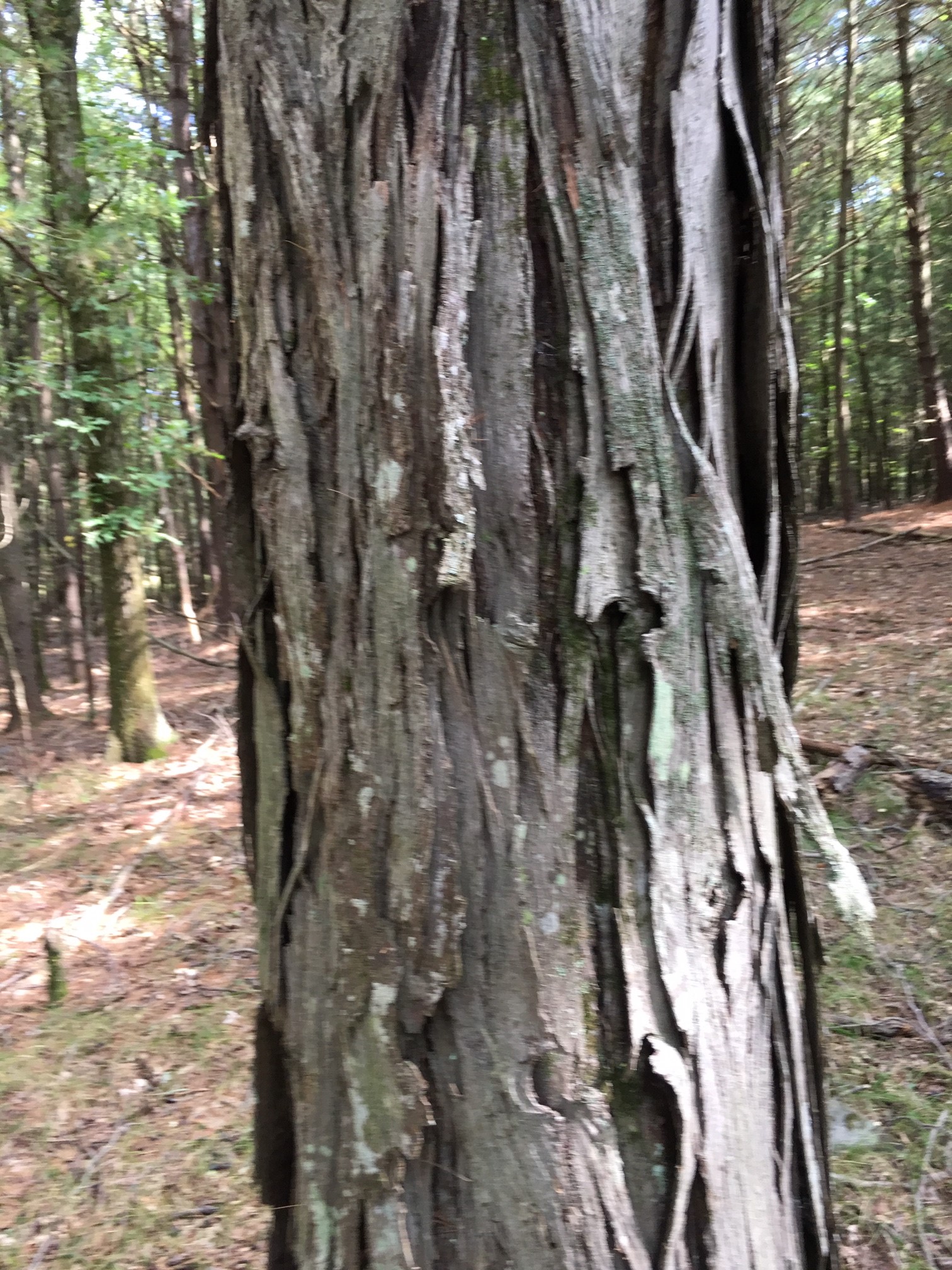
A mature shagbark hickory can grow to over 100 feet and live for 350 years. The bark of the mature tree will curl up, sometimes extravagantly. The first time I saw a large one, with its several appendages jutting out all along its considerable height, I was reminded of my first scary movie: Disney’s “Snow White.”
She enters the forest and is scared by several large trees, which have not only arms, but bright, malevolent eyes! Fortunately they were rooted, or they might have pursued her to a bad fate. I hid my eyes.
Real shagbark hickories do not have eyes. They have delicious nuts everyone eats, from mice to bears to humans. The nuts lack commercial value, however, as it takes about forty years for a tree to start yielding, and even then a tree’s productivity varies considerably. Their leaves turn a golden brown in autumn, providing harmony to the reds, oranges and yellow of other species. Their wood is extremely hard. They provide vast shade in summer. They are good citizens of the forest.
I recently reviewed the “Snow White” scene. I now understand it was all in her mind. She was terrified by circumstances. The trees appeared menacing, causing her to run more deeply into the forest, which increased her fear and confusion. Yet I clearly remember my fear upon first seeing this was quite real.
So it is with fear. It can cause us to mistake good citizens as menacing evil. We can run from them, only to increase our disorientation and confusion.
Snow White was a child, her fears understandable. She had nothing to fear from the forest, as she eventually discovered. Her real danger was from the evil power in the castle. That’s the way it is with fear, at any age. We project our fears upon things and even people that, if given a chance, could be helpful, benevolent.
The shagbark hickory is our friend. We need no longer fear what scared us as children, nor fear as adults the shadows in the forest, or anywhere.
Nevermore
- Details
- Written by PEEC - Janine
- Category: PEEC Blog
A Naif in the Forest by Darrell Berger
Wing Tips to Hiking Boots: Musings of a New, Full-Time Poconos Resident
This photo was taken during last winter’s late storm that dumped over a foot of snow on our part of the forest, and knocked out electrical power for nine days. About an hour before the seventy mile-per-hour winds began, seven crows visited our bird feeder. Here are two of them.
In the years we have been out here, we had never had any crows at our bird feeders, though we have seen them near the road several times. Neither have we seen them since. Without being terribly superstitious, I admit that seeing them gather at our window just as the storm was gathering, seemed a bit ominous, foreboding.
That is, I think they were crows. I believe ravens are much bigger. There is also a variety called Fish Crows, found near fresh water. These are a bit smaller than regular crows and have a slightly more complicated call. I welcome readers to render verdicts as to crow specificity.
In this case, regardless of size and sound, these visitors were indeed harbingers of disaster and, to say the least, sudden tumult and change. This has long been the meaning given to unexpected appearances of crows or ravens. They are said to foretell, if not death, then at least difficult transitions. At best they take on the persona of trickster, bringer of surprises of “the joke is on you” variety. The old cartoon characters Heckle and Jeckle continued that tradition. Though they were officially magpies, they always seemed like crows to me.
The most enduring example of this symbolism is the raven in the library of Edgar Allen Poe as he contemplates the death of his beloved. Mr. Poe, however, was of such a determinedly morose disposition, he might have beheld a kitten playing with a ball of yarn and proclaimed, “Nevermore!”
I will watch my bird feeders carefully this year. Will crows again appear? What will be the circumstances of their arriving? What follows on the wings of their visit? If it’s another two feet of snow and nine days without power, I’m bringing in a scarecrow next winter!

Grow Your Own
- Details
- Written by PEEC - Janine
- Category: PEEC Blog
A Naif in the Forest by Darrell Berger
Wing Tips to Hiking Boots: Musings of a New, Full-Time Poconos Resident
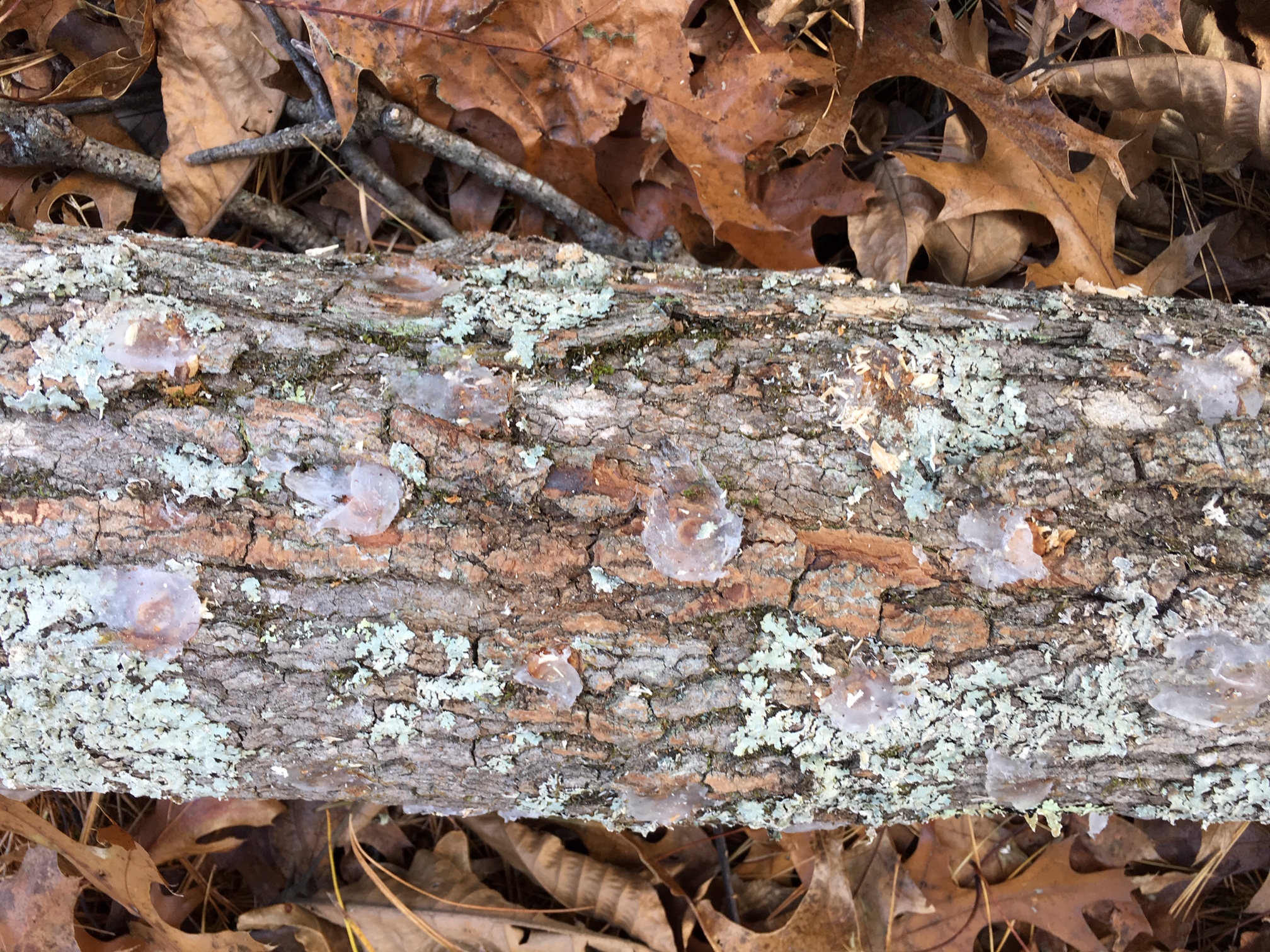
Readers of “Naif in the Forest” will recall my recent difficulty identifying mushrooms. This time I am 100% positive this photograph is of future Shiitake mushrooms, species Lentinula edodes, strain West Wind. I know because I planted them, or rather, plugged them. Note several roundish, waxy-looking circles. The wax seals a plug, about an inch long, that is hammered into the logs after holes are drilled using a special drill bit.
We tried this a few years ago, with minimum success. I think we left the logs a bit high and dry. This time they are in an area that is better shaded and stays damper. Now we just wait until spring.
Shiitakes are not native to our forest, though, I am assured, this plugging method has met with success locally. They are native to Japan and Southeast Asia. Their first mention in Japan was about 900 years ago, and they have been grown and categorized in America since 1877. There are all sorts of medicinal claims for Shiitakes, both from traditional Chinese medicine and current scientific studies. They are a good source of B vitamins, strengthen the immune system and increase energy. Stinkbugs and stilt grass came to America from Asia as unwelcome invaders. We’ll take all the Shiitakes we can get.
Among the many things I had never imagined myself doing was hammering mushroom spawn into logs after drilling several hundred holes precisely for this purpose. As an avid consumer of Shittakes, I undertake the task eagerly at my wife’s suggestion. This did, however, activate my long-standing difficulty in following directions, no matter how simple.
Once I determined which setting on the drill actually drilled into the wood, I was fine. Due my extreme left-handedness, I almost always inadvertently tighten a screw before loosening; turn a drill to the wrong setting before I find the correct one. I have no learning curve on this. I make the mistake, again and again, correct it, and then do fine. I define fine as “no blood shed.” Watch this space for signs of Shiitake success or failure in the spring.
Deer Bed
- Details
- Written by PEEC - Janine
- Category: PEEC Blog
A Naif in the Forest by Darrell Berger
Wing Tips to Hiking Boots: Musings of a New, Full-Time Poconos Resident
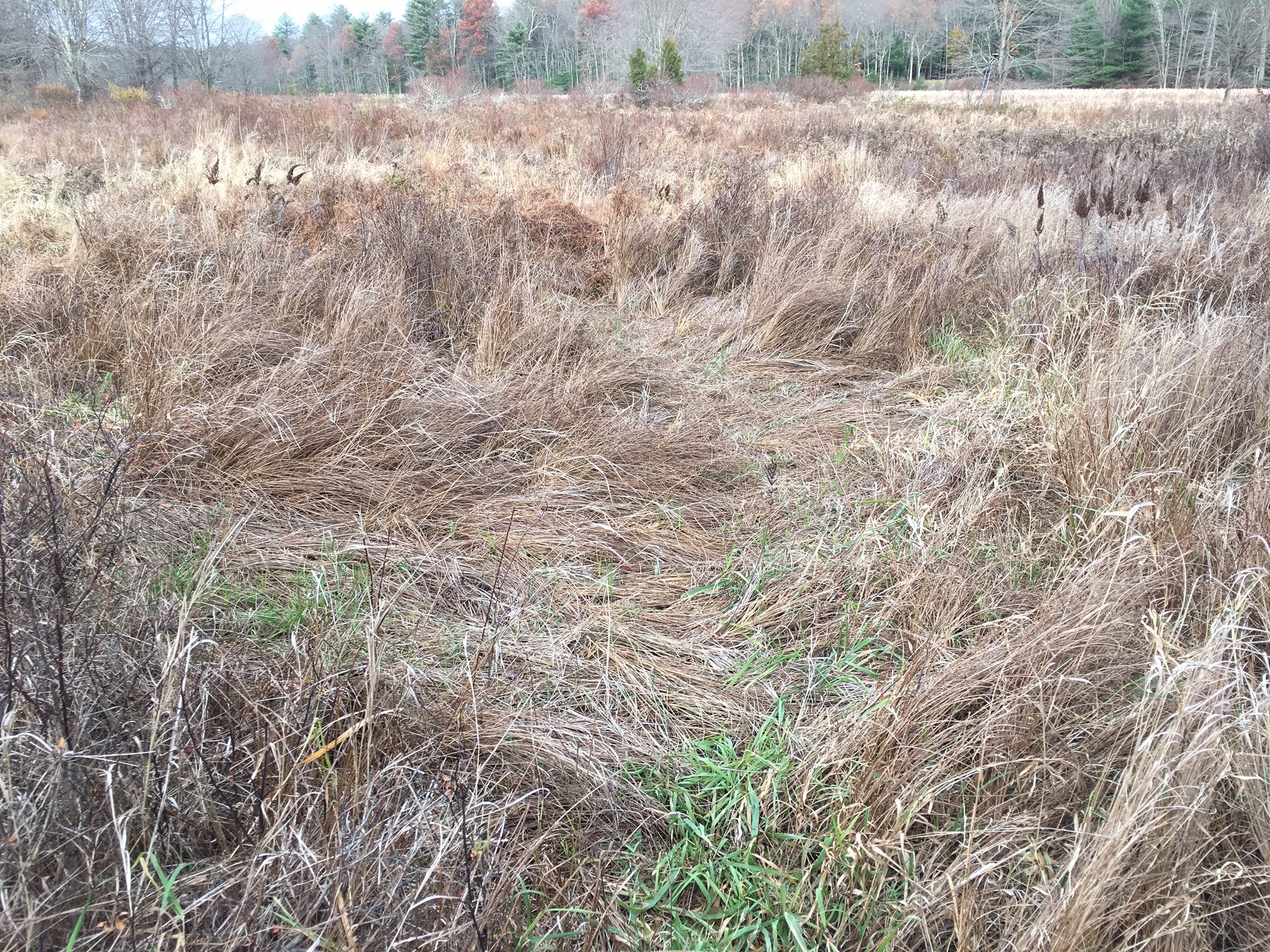
This week’s photo is taken twenty feet from the edge of a nearby creek. The brush is flattened in an almost circular pattern. I suggested to my wife it might be a crop circle where aliens had landed.
However, she was a chemistry major and is prone to scientific explanations. She said they looked like where deer had lain. They were indeed deer-size. Subsequent visits showed it to be not only a deer bed, but also a deer lavatory. I had not noticed such clearings before. I have spotted a higher number of deer recently. It is reasonable some would choose to relax here.
Three deer have visited us so often I can recognize them. One is a fawn, who cavorted joyously while mom seemed to say, “Focus! Time to eat.” We responded with more deer repellant and netting to protect our garden, which proved as futile as always.
I had never asked myself, “How do deer sleep?” A quick web search explained that this clearing was indeed a likely deer bed. Deer rest when they feel safe, sometimes returning to favorite sites. They seldom sleep for more than a couple minutes at a time, and often for only a few seconds. They can also sleep standing up and with their eyes open. They often sleep during the day, grazing at night.
They have adapted to being hunted. The automobile is their most treacherous predator, coming upon them very fast, making no forest noises, no natural odor.
I’ve been seeing deer around here since I arrived, as we all do, but this was the first time I had seen an area where deer slept or rested. I can now recognize such an area, and not confuse it with a UFO dock. Maybe, just a little and very gradually, I’m becoming less of a naïf in the forest. However, I suspect the depth of my ignorance has barely been plumbed, as future entries will demonstrate.